
If you’re facing criminal charges in California, one of the first questions you need answered is straightforward but critical: Are you dealing with a misdemeanor or a felony? This distinction isn’t just legal terminology—it fundamentally shapes everything about your case, from potential penalties to how the justice system will treat you moving forward.
Understanding California criminal charges begins with recognizing that not all crimes are treated equally. The classification of your charge affects your freedom, your future opportunities, and your rights. Whether you’re a first-time offender confused by the legal process or someone trying to understand what comes next, this guide breaks down what you need to know about misdemeanor vs felony charges in language that makes sense.
The Basic Framework of California Criminal Charges
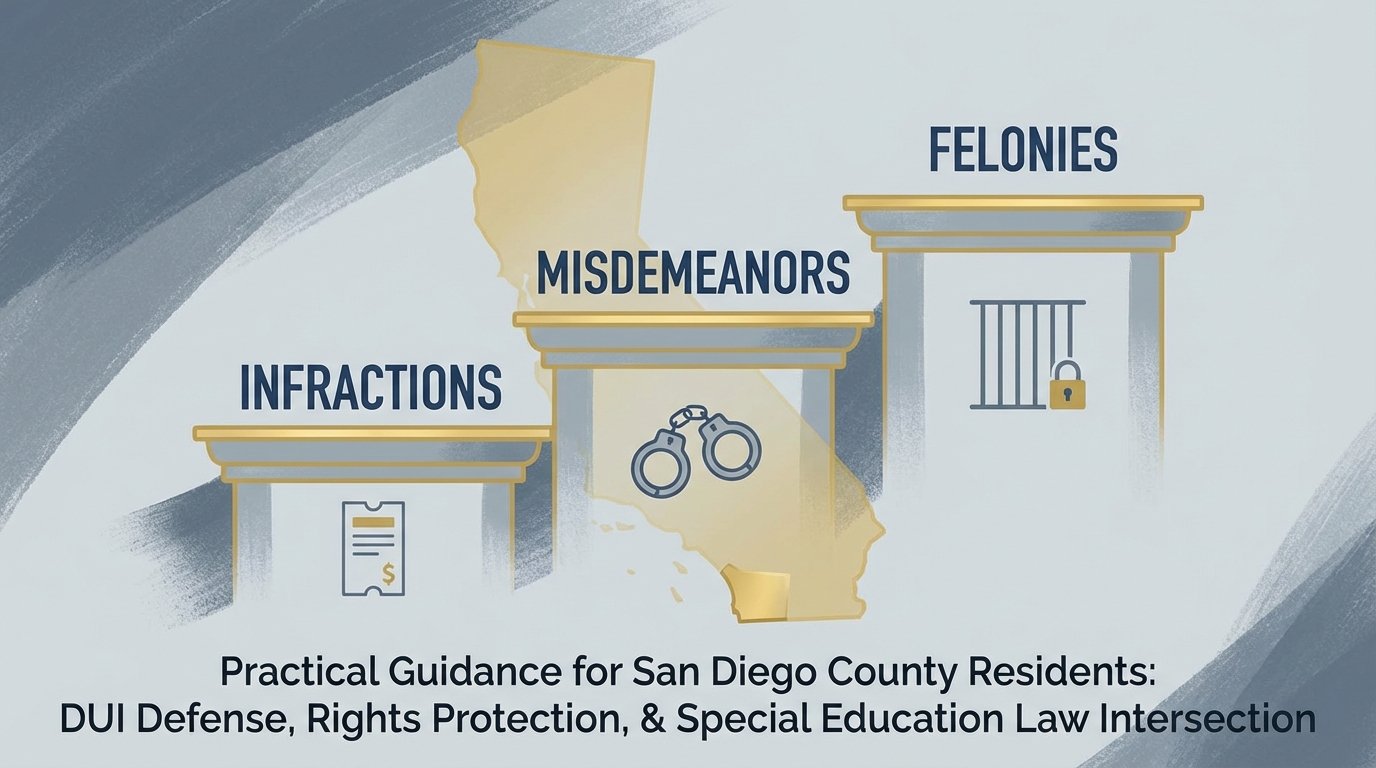
California law divides crimes into three main categories: infractions, misdemeanors, and felonies. Infractions are minor violations like traffic tickets that typically result in fines. The more serious criminal charge types—misdemeanors and felonies—carry potential jail or prison time and create a criminal record that can impact your life for years.
The fundamental difference between a misdemeanor and a felony comes down to severity. Misdemeanors are less serious offenses punishable by up to one year in county jail. Felonies are more serious crimes that can result in state prison sentences exceeding one year, with some carrying life sentences or even capital punishment in extreme cases.
But here’s what makes California’s system more complex: some crimes can be charged as either a misdemeanor or a felony depending on circumstances. These are called “wobblers,” and they give prosecutors discretion in how aggressively to pursue charges. This is where having an attorney who understands San Diego County courts becomes invaluable—someone who knows how local prosecutors make these decisions and how to advocate for the lesser charge.
What Qualifies as a Misdemeanor in California?
Misdemeanors cover a wide range of offenses that California law considers less serious but still worthy of criminal penalties. Common misdemeanors include:
- First-time DUI without injuries
- Petty theft (stealing property valued under $950)
- Simple assault without serious injury
- Trespassing
- Disorderly conduct
- Possession of small amounts of certain controlled substances
- Driving on a suspended license
- Vandalism causing less than $400 in damage
California actually has two types of misdemeanors. Standard misdemeanors carry up to six months in county jail and fines up to $1,000. “Gross misdemeanors” or “aggravated misdemeanors” are more serious and can result in up to one year in county jail.
Even though misdemeanors are less severe than felonies, they still create a criminal record. This can affect employment, housing applications, and professional licensing. If you’re in the military or hold a security clearance, even a misdemeanor conviction can jeopardize your career. The consequences extend beyond the immediate penalties, which is why treating any criminal charge seriously from the start matters.
Understanding Felony Charges and Penalties
Felonies represent the most serious category of crimes in California. Felony penalties California imposes are severe and life-altering. These charges include:
- Murder and manslaughter
- Rape and sexual assault
- Robbery
- Burglary
- Grand theft (property valued over $950)
- Serious drug trafficking
- DUI causing injury or repeat DUI offenses
- Assault with a deadly weapon
- Domestic violence with serious injury
California organizes felonies into different classes based on the maximum sentence. Some felonies specify exact sentencing ranges, while others fall under California’s determinate sentencing law with low, middle, and high terms. For example, a particular felony might carry 2, 3, or 4 years, with the middle term being the standard absent aggravating or mitigating factors.
Felony convictions carry consequences that extend far beyond prison time. You may lose your right to vote while incarcerated, your right to own firearms, and face significant barriers to employment. Professional licenses can be suspended or revoked. Immigration consequences can include deportation for non-citizens. You may become ineligible for certain government benefits and face restrictions on where you can live.
These collateral consequences often impact your life more significantly than the actual sentence. This is why the stakes are so high and why having dedicated legal representation from day one is essential.
Wobbler Offenses: When Charges Can Go Either Way
One of the most important aspects of California criminal law is the “wobbler” category—offenses that prosecutors can charge as either misdemeanors or felonies. This prosecutorial discretion means your future partially depends on decisions made by the district attorney’s office.
Common wobbler offenses include:
- Domestic battery
- Sexual battery
- Assault with a deadly weapon (in some circumstances)
- Burglary (second degree)
- Forgery
- Grand theft
- Vandalism causing $400 or more in damage
- Stalking
Several factors influence how prosecutors charge wobblers: the specific facts of your case, your criminal history, whether anyone was injured, the value of property involved, and the strength of the evidence. In San Diego County, building relationships and understanding how local prosecutors approach these decisions can make a meaningful difference in outcomes.
When you work with a solo practitioner who personally handles every aspect of your case, you get someone who knows your situation inside and out—someone who can present the full context of your circumstances to prosecutors rather than reducing you to a case number.
Can You Reduce a Felony to a Misdemeanor?
Even if you’re initially charged with or convicted of a felony, California law provides mechanisms to reduce felony to misdemeanor status. This process, known as a “17(b) motion” after the California Penal Code section that authorizes it, can be life-changing.
For wobbler offenses, you can request felony reduction at several points:
- Before sentencing, asking the judge to treat the offense as a misdemeanor
- During probation, if granted felony probation rather than prison
- After successfully completing probation
Judges consider multiple factors when deciding whether to grant a 17(b) motion: your criminal history, the circumstances of the offense, whether you’ve completed all probation requirements, your rehabilitation efforts, and the impact on public safety.
Successfully reducing a felony to a misdemeanor restores many rights and removes significant barriers to employment and housing. It’s treated as though you were convicted of a misdemeanor from the start. This is one of the most powerful tools available for rebuilding your life after a conviction.
Beyond wobbler reductions, California also offers expungement under Penal Code Section 1203.4, which allows you to withdraw your guilty plea and dismiss the case after completing probation. While not erasing the conviction entirely, expungement provides substantial relief and requires disclosure in fewer situations.
How Classification Affects Your Defense Strategy
Whether you’re facing misdemeanor or felony charges fundamentally shapes defense strategy. With misdemeanors, we might focus on negotiating reduced charges, alternative sentencing like diversion programs, or community service arrangements. The goal is often minimizing impact on your daily life while resolving the case efficiently.
Felony cases demand more aggressive and comprehensive defense strategies. Every element of the prosecution’s case requires scrutiny. Constitutional violations, procedural errors, witness credibility issues, and forensic evidence problems all become critical examination points. Felony cases also typically involve more complex discovery, expert witnesses, and longer court timelines.
For wobbler offenses, the initial defense focus is often convincing prosecutors to file misdemeanor rather than felony charges—or persuading judges to reduce charges at preliminary hearing. This requires presenting mitigating factors persuasively: your lack of criminal history, the specific circumstances making your case less serious, your ties to the community, and evidence of good character.
Early intervention makes an enormous difference. The sooner you have an attorney involved, the more opportunities exist to shape how charges are filed and present your side before prosecutors lock into a position.
What to Do If You’re Facing Criminal Charges
If you’ve been arrested or know charges are pending, taking the right steps immediately protects your rights and improves potential outcomes.
First, exercise your right to remain silent. Nothing you say to police will talk them out of arresting you, but your words can absolutely be used against you. Politely decline to answer questions and request an attorney.
Second, contact a criminal defense attorney before talking to prosecutors or appearing in court. Many people facing charges for the first time believe they can explain their way out of trouble or that hiring an attorney makes them look guilty. The opposite is true—prosecutors expect you to have representation, and navigating the system without legal guidance puts you at a severe disadvantage.
Third, preserve any evidence that supports your case: text messages, photos, witness contact information, receipts, or documentation of your whereabouts. Memory fades and evidence disappears over time.
Fourth, understand that cost shouldn’t prevent you from getting quality representation. Many attorneys, including solo practitioners focused on personalized service, offer payment plans and financing options that make legal representation accessible. The cost of inadequate representation far exceeds attorney fees when you consider the long-term consequences of convictions.
The Solo Practice Advantage
When you’re facing criminal charges, you need an attorney who knows every detail of your case—not a firm where your file gets passed between associates and paralegals. Working with a dedicated solo practitioner means direct access to the attorney handling your case, consistent communication, and someone personally invested in your outcome.
You’ll work with someone who appears with you at every court date, knows San Diego County courts and local prosecutors, and treats you as an individual rather than a case file. This personalized approach makes a tangible difference in outcomes because prosecutors and judges recognize when an attorney truly knows their client’s story.
Take Action to Protect Your Future
Understanding the difference between misdemeanor vs felony charges is just the first step. What matters now is taking action to protect your rights and your future. Whether you’re facing DUI charges, theft accusations, assault allegations, or any other criminal matter in San Diego County, you don’t have to navigate this alone.
Criminal charges create stress and uncertainty, but they don’t have to define your future. With knowledgeable representation focused on your specific circumstances, many cases result in reduced charges, alternative sentencing, or even dismissal. The key is acting quickly while options remain available.
Contact a criminal defense attorney who will personally handle your case, answer your questions directly, and fight for the best possible outcome. Your initial consultation will help you understand exactly what you’re facing and what strategies can protect your future. Don’t wait until options narrow—reach out today.