
Getting pulled over by law enforcement can trigger immediate anxiety, especially if you’ve had anything to drink. In San Diego County, where DUI checkpoints and patrols are common along Interstate 5, State Route 163, and popular areas like the Gaslamp Quarter and Pacific Beach, understanding what legally justifies a traffic stop is crucial to protecting your rights. The concept of “reasonable suspicion” serves as the constitutional foundation that determines whether a police officer can lawfully pull you over for a suspected DUI.
As a criminal defense attorney San Diego trusts for DUI cases, I’ve seen countless situations where understanding reasonable suspicion made the difference between a dismissed case and a conviction. Let’s break down exactly what this legal standard means and how it applies to your situation.
What Exactly Is Reasonable Suspicion?
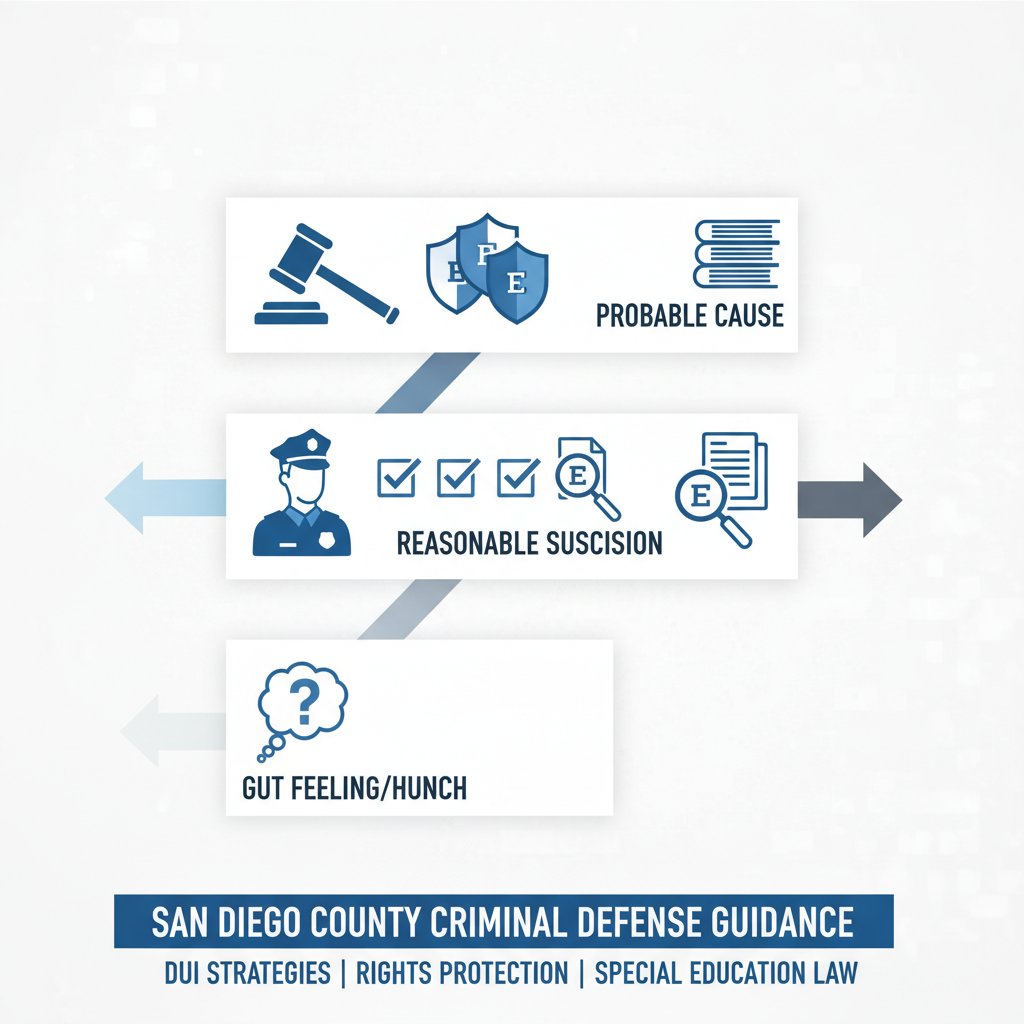
Reasonable suspicion is a legal standard that falls between a mere hunch and probable cause. It requires that a police officer have specific, articulable facts that would lead a reasonable person to believe that criminal activity may be occurring. This isn’t just a gut feeling—officers must be able to point to observable behaviors or circumstances that justify the stop.
In the context of DUI stops, reasonable suspicion means an officer must observe specific driving behaviors or vehicle equipment violations before pulling you over. The Fourth Amendment to the U.S. Constitution protects you against unreasonable searches and seizures, which means law enforcement cannot randomly stop vehicles without justification.
California law reinforces this protection. Officers need reasonable suspicion to initiate a traffic stop, which is considered a “seizure” under constitutional law. However, what constitutes reasonable suspicion in practice can be nuanced, and that’s where experienced DUI defense comes into play.
Common Reasons Officers Cite for DUI Stops
San Diego law enforcement officers typically justify DUI stops based on observations that fall into several categories. Understanding these can help you recognize whether your stop was legally valid.
Driving Patterns That Raise Suspicion
Officers are trained to watch for specific driving behaviors associated with impairment. A DUI attorney San Diego drivers work with regularly challenges stops based on these observations:
- Weaving within your lane or crossing lane markers
- Making unusually wide or tight turns
- Driving significantly below the speed limit without apparent reason
- Stopping inappropriately or at irregular intervals
- Responding slowly to traffic signals
- Following other vehicles too closely
- Braking erratically or without cause
- Turning illegally or with excessively wide radius
- Driving without headlights at night
- Near-miss accidents or actual collisions
Vehicle Equipment Violations
Officers can also initiate stops for legitimate equipment violations, even if their true interest is investigating potential DUI. Common pretextual stops include:
- Broken or non-functioning tail lights or brake lights
- Expired registration tags
- Cracked windshields
- Modified exhaust systems
- Tinted windows exceeding legal limits
While these violations provide legal justification for a stop, an experienced San Diego DUI lawyer will examine whether the stated reason was merely a pretext for a fishing expedition.
When Is a DUI Stop Not Legally Valid?
Not every traffic stop meets the legal threshold for reasonable suspicion. Understanding when stops cross the line into unconstitutional territory is essential for your defense.
Anonymous Tips Without Corroboration
If an officer stops you solely based on an anonymous tip that you’re driving impaired, without personally observing any suspicious behavior, this may not constitute reasonable suspicion. California courts have held that officers must independently corroborate information from anonymous sources before initiating a stop.
Stops Based on Location or Time Alone
Leaving a bar or nightclub at 2 a.m. doesn’t, by itself, justify a traffic stop. Officers cannot pull you over simply because you’re driving in an area known for bars or during times when people typically drink. They must observe actual driving behavior or violations.
Vague or Generalized Observations
Statements like “the driver looked suspicious” or “the car was in a high-crime area” don’t meet the specific, articulable facts requirement. A DUI defense attorney will scrutinize officer reports for these types of insufficient justifications.
Prolonged Following Without Observable Violations
Sometimes officers follow vehicles for extended periods hoping to observe a violation. If you’re driving perfectly lawfully and an officer follows you for miles without witnessing any suspicious behavior, any eventual stop may be questionable.
DUI Checkpoints: A Different Legal Standard
DUI checkpoints operate under different constitutional rules than individual traffic stops. In California, sobriety checkpoints are legal, but they must meet specific requirements established by the California Supreme Court in Ingersoll v. Palmer:
- Supervisors, not field officers, must make operational decisions
- The checkpoint must use a neutral formula for stopping vehicles (every car, every third car, etc.)
- The checkpoint location must be reasonable based on DUI history
- Adequate safety precautions must be in place
- The checkpoint must be clearly visible with proper signage and lighting
- Officers should minimize detention time
- The checkpoint must be publicly advertised in advance
San Diego County commonly sets up DUI checkpoints in areas like Mission Valley, Point Loma, and along major corridors during holidays and weekends. If you were stopped at a checkpoint that didn’t follow these guidelines, a criminal defense attorney San Diego residents trust can challenge the legality of your stop.
How Reasonable Suspicion Affects Your DUI Defense
The legality of your initial stop is often the first issue a San Diego DUI lawyer will examine. Why? Because if the stop violated your Fourth Amendment rights, everything that followed—the field sobriety tests, the breathalyzer, the arrest—may be inadmissible in court.
This legal principle is called the “fruit of the poisonous tree” doctrine. If the tree (the initial stop) is poisoned (unconstitutional), then all the fruit (evidence gathered) may be thrown out. This can result in your DUI charges defense leading to a complete dismissal of your case.
What to Expect in Your Defense Strategy
When you work with a dedicated DUI attorney San Diego offers, challenging reasonable suspicion typically involves:
Obtaining the Dash Cam and Body Cam Footage: Video evidence often contradicts officer reports. What an officer describes as “weaving” might show you briefly crossing a lane marker once to avoid a pothole.
Reviewing the Police Report for Inconsistencies: Officers sometimes provide vague or contradictory descriptions of the driving behavior that justified the stop. These inconsistencies can undermine the prosecution’s case.
Examining the Officer’s Training and Experience: How qualified was the officer to identify impaired driving? Were they properly trained in DUI detection?
Investigating Environmental Factors: Poor road conditions, confusing signage, or road construction might explain driving behavior the officer attributed to impairment.
Filing Suppression Motions: If the stop was illegal, your attorney will file a motion to suppress evidence, asking the court to exclude everything obtained after the unconstitutional stop.
What Should You Do If You’re Pulled Over?
Understanding your rights during a traffic stop can significantly impact your case. Here’s practical advice for San Diego drivers:
- Pull over safely and promptly when you see lights behind you
- Be polite and respectful, but remember you have rights
- Provide your license, registration, and insurance when requested
- You’re not required to answer questions about where you’ve been or whether you’ve been drinking
- You can politely decline field sobriety tests (these are voluntary in California)
- Understand that refusing a chemical test after arrest has consequences under California’s implied consent law
- Request to speak with an attorney as soon as possible
- Pay attention to what the officer says about why they stopped you
- Try to remember specific details about your driving before the stop
Time Is Critical in DUI Cases
Many people don’t realize that the window to protect your rights begins immediately after a DUI arrest. You have only 10 days from your arrest to request a DMV hearing to contest your license suspension. This administrative process is separate from your criminal case, and it requires quick action.
Early involvement of a DUI defense attorney can make a substantial difference. Evidence like surveillance footage gets overwritten, witness memories fade, and procedural deadlines pass. When you’re facing DUI charges, waiting isn’t an option.
The Solo Practitioner Advantage
When your freedom, driving privileges, and future are at stake, you deserve an attorney who knows your name and personally handles your case. Unlike large firms where you might be passed between associates and paralegals, working with a dedicated solo practitioner means direct communication and personalized attention throughout your case.
You’ll have someone who answers your calls, explains complex legal concepts in plain language, and develops a defense strategy tailored to your specific circumstances. This personal approach is especially valuable in DUI cases, where details matter and cookie-cutter defenses fall short.
Financing Your Defense
Facing criminal charges creates financial stress on top of emotional anxiety. Quality legal representation shouldn’t be out of reach because of cost concerns. Many DUI defense attorneys, including myself, offer flexible payment plans that make experienced representation accessible when you need it most.
Consider this: the long-term costs of a DUI conviction—increased insurance rates, potential job loss, license suspension, and other consequences—far exceed the investment in a strong defense. Protecting your rights now can save you substantially in the future.
Take Action to Protect Your Rights
If you’ve been stopped for DUI in San Diego County, the legality of that stop could be the key to your defense. Don’t assume the officer had valid reasonable suspicion just because they pulled you over. Many stops that seem routine actually violate constitutional protections.
Whether you were stopped on Highway 94 in Spring Valley, cruising through La Jolla, or heading home through Chula Vista, you have rights that deserve protection. The prosecutors and courts won’t look out for your interests—that’s why you need a committed advocate on your side.
Contact a qualified DUI attorney in San Diego today for a case evaluation. During a consultation, an attorney can review the circumstances of your stop, identify potential defenses, and explain your options moving forward. Don’t face DUI charges alone—reach out now to someone who will fight to protect your rights, your license, and your future.