
Getting arrested ranks among life’s most frightening experiences. Your heart races, your mind floods with questions, and the uncertainty about what comes next can feel overwhelming. If you’ve been arrested in San Diego County, understanding the criminal process navigation ahead can help reduce anxiety and empower you to make informed decisions about your defense.
The hours and days following an arrest are critical. The actions you take—and the legal representation you secure—can significantly impact the outcome of your case. This guide walks you through each stage of the criminal justice process in San Diego County, explaining your rights and what to expect at every turn.
The Immediate Aftermath: Booking and Detention
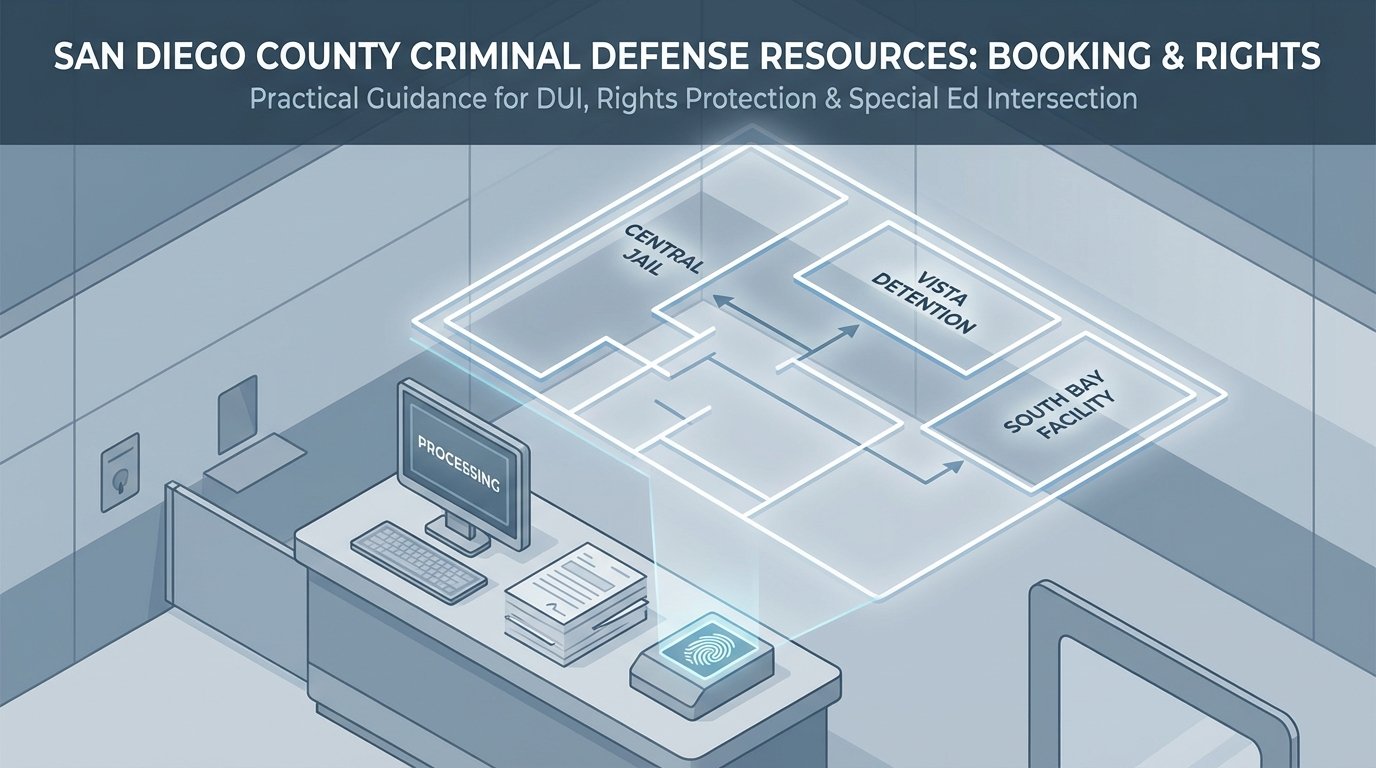
After your arrest, law enforcement transports you to a San Diego County detention facility for booking. This administrative process typically occurs at facilities like the San Diego Central Jail, Vista Detention Facility, or South Bay Detention Facility, depending on where the arrest occurred.
During booking, officers will:
- Record your personal information
- Photograph and fingerprint you
- Conduct warrant checks and criminal background searches
- Collect and inventory your personal belongings
- Conduct a health screening
- Place you in a holding cell
The booking process can take anywhere from two to eight hours, sometimes longer during busy periods. This waiting period feels interminable, but it’s a standard part of criminal procedure that every defendant experiences.
Your Rights During Detention
Even while in custody, you maintain important constitutional protections. You have the right to remain silent—and you should exercise this right. Anything you say to law enforcement can be used against you in court. Police officers may attempt to question you, but you can politely decline and request to speak with a criminal defense attorney san diego.
You also have the right to make phone calls. Use this opportunity wisely to contact family members and, most importantly, to reach out to a san diego criminal lawyer who can begin working on your case immediately.
Bail and Release Options
After booking, the question becomes: when can you get out? California law requires that you either be released or brought before a judge within 48 hours of arrest (excluding weekends and holidays). San Diego County uses a bail schedule that sets standard bail amounts for different offenses, though judges can adjust these amounts based on individual circumstances.
Several release options may be available:
- Citation release: For minor offenses, you may be released at the scene with a written citation requiring you to appear in court
- Own recognizance (O.R.) release: You’re released based on your promise to appear in court, without posting bail
- Bail bond: You pay a percentage (typically 10%) of the total bail amount to a bail bondsman
- Cash bail: You post the full bail amount directly with the court
Factors that influence bail decisions include the severity of charges, your criminal history, community ties, employment status, and whether you’re considered a flight risk. A skilled criminal charges defense attorney can argue for reduced bail or O.R. release by presenting evidence of your stability and reliability.
For those concerned about financial constraints, it’s worth noting that many criminal defense attorneys, including solo practitioners who prioritize community-first values, offer flexible payment arrangements. Getting quality legal representation shouldn’t be delayed due to financial concerns.
The Arraignment: Your First Court Appearance
Your arraignment typically occurs within 48 to 72 hours after arrest if you’re in custody, or within a few weeks if you’ve been released. This first court appearance takes place at the appropriate San Diego County courthouse—such as the downtown San Diego Central Courthouse, North County Regional Center in Vista, South Bay Courthouse in Chula Vista, or East County Regional Center in El Cajon.
During the arraignment, several important things happen:
Formal Charges Are Read
The prosecutor formally presents the charges against you. These charges may differ from what you were initially arrested for—they could be reduced, increased, or include additional offenses based on the prosecutor’s review of the evidence.
You Enter a Plea
You’ll be asked to enter a plea of guilty, not guilty, or no contest. In most cases, your attorney will advise entering a not guilty plea, which preserves all your rights and defense options. This plea doesn’t mean you’ll go to trial—it simply means you’re not admitting guilt and the prosecution must prove their case.
Bail Is Reviewed
If you’re still in custody, the judge may reconsider bail conditions. Your criminal procedure attorney can present arguments for bail reduction or alternative release conditions.
Future Court Dates Are Set
The judge will schedule your next court appearance, typically a pretrial conference or preliminary hearing for felonies.
Having an experienced san diego criminal lawyer at your arraignment makes a significant difference. Rather than navigating this confusing process alone, you have an advocate who understands San Diego County court procedures and can immediately begin building your defense strategy.
The Pretrial Phase: Investigation and Negotiation
The weeks or months following arraignment constitute the pretrial phase—often the most crucial period for your defense. This is when your attorney conducts a thorough investigation, challenges the prosecution’s evidence, and works toward the best possible outcome.
Discovery and Evidence Review
Your criminal charges defense team will obtain all evidence the prosecution plans to use against you, including police reports, witness statements, forensic evidence, and video footage. A meticulous attorney examines this evidence for inconsistencies, procedural errors, or constitutional violations that could weaken the prosecution’s case.
Pretrial Motions
Your attorney may file various motions to protect your rights and strengthen your defense position:
- Motion to Suppress Evidence: Arguing that evidence was obtained through illegal searches or violations of your constitutional rights
- Motion to Dismiss: Requesting dismissal based on insufficient evidence or procedural errors
- Pitchess Motion: Seeking law enforcement personnel records that may reveal officer misconduct
- Motion to Reduce Charges: Arguing for reduction from felony to misdemeanor where applicable
San Diego County judges carefully review these motions, and successful motions can dramatically alter the trajectory of your case—sometimes resulting in dismissed charges or significantly weakened prosecution arguments.
Plea Negotiations
Throughout the pretrial phase, your attorney communicates with the prosecutor to explore resolution options. Contrary to popular belief, negotiation isn’t about admitting defeat—it’s about achieving the best possible outcome based on the specific circumstances of your case.
An experienced arrest warrant attorney understands the negotiation landscape in San Diego County, including which prosecutors and judges handle specific cases and what outcomes are realistic. This institutional knowledge, combined with thorough case preparation, positions your attorney to negotiate from strength.
Solo practitioners offer a distinct advantage during this phase: you communicate directly with the attorney handling your case, not a paralegal or junior associate. Every development in your case receives immediate attention from the person who knows it best.
Possible Case Outcomes
Criminal cases can resolve in several ways, and understanding these possibilities helps set realistic expectations:
Dismissal
The prosecutor may dismiss charges if evidence is insufficient, witnesses become unavailable, or your attorney successfully challenges the legal basis for prosecution. This represents the best possible outcome—your case ends without conviction.
Diversion Programs
For eligible defendants, especially first-time offenders, San Diego County offers diversion programs. These alternatives allow you to complete education, counseling, or community service in exchange for dismissed charges. Programs include drug diversion, mental health diversion, and military diversion for veterans.
Plea Agreement
If negotiation achieves favorable terms—such as reduced charges, dismissed counts, or minimal sentencing recommendations—a plea agreement may serve your best interests. Your attorney will explain all consequences before you make this decision.
Trial
When acceptable resolution cannot be reached, your case proceeds to trial. You have the constitutional right to trial by jury, where the prosecution must prove guilt beyond reasonable doubt. Trials involve jury selection, opening statements, witness testimony, cross-examination, and closing arguments. An authoritative criminal defense attorney san diego guides you through this complex process, advocating forcefully for your acquittal.
What You Should Do Right Now
If you’ve been arrested or learned that an arrest warrant has been issued, taking immediate action protects your rights and improves your case outcome:
Exercise your right to remain silent. Don’t discuss your case with anyone except your attorney—not cellmates, not family members during recorded jail calls, and certainly not law enforcement.
Document everything you remember. Write down detailed notes about the arrest circumstances, including who was present, what was said, and the timeline of events. These details fade from memory but may prove crucial to your defense.
Preserve evidence. Identify potential witnesses, save relevant text messages or emails, and photograph injuries or property damage if applicable to your case.
Contact a criminal defense attorney immediately. The earlier an attorney becomes involved, the more options remain available. Early intervention sometimes prevents charges from being filed at all.
The Solo Practitioner Advantage
During this stressful time, personalized attention matters enormously. Working with a solo practitioner means your case receives dedicated focus from an attorney who knows every detail intimately. You’re not passed between multiple attorneys or left waiting for callbacks from overwhelmed staff.
This direct relationship builds trust and ensures nothing falls through the cracks. You can ask questions without feeling rushed, receive updates promptly, and participate meaningfully in defense strategy decisions. For many clients, this accessible, compassionate approach reduces the anxiety that accompanies criminal charges.
Moving Forward With Confidence
Facing criminal charges in San Diego County feels isolating and frightening, but you don’t navigate this journey alone. Understanding what happens after arrest demystifies the process and empowers you to advocate for yourself effectively.
Remember that an arrest is not a conviction. The criminal justice system provides numerous opportunities to challenge charges, present your side of the story, and protect your future. With knowledgeable legal representation and a strategic defense approach, many people facing charges achieve outcomes far better than they initially feared possible.
Your next steps determine how this chapter of your life unfolds. Don’t face the San Diego County criminal justice system without an experienced advocate in your corner. Contact a dedicated criminal procedure attorney who will treat you with dignity, fight for your rights, and work tirelessly toward the best possible resolution of your case. The support you need is just a phone call away—reach out today to discuss your situation and explore your defense options.