
If you see flashing red and blue lights in your rearview mirror after leaving a restaurant or party, your heart probably starts racing. When the officer approaches your window and suspects alcohol consumption, they’ll likely ask you to perform field sobriety tests. But here’s what many California drivers don’t know: you have the right to refuse these tests without the same penalties as refusing a chemical test.
Understanding your rights regarding field sobriety tests in California can make a significant difference in how a DUI stop unfolds. This knowledge is particularly important for San Diego County drivers who want to protect themselves during traffic stops while staying within the law.
What Exactly Are Field Sobriety Tests?
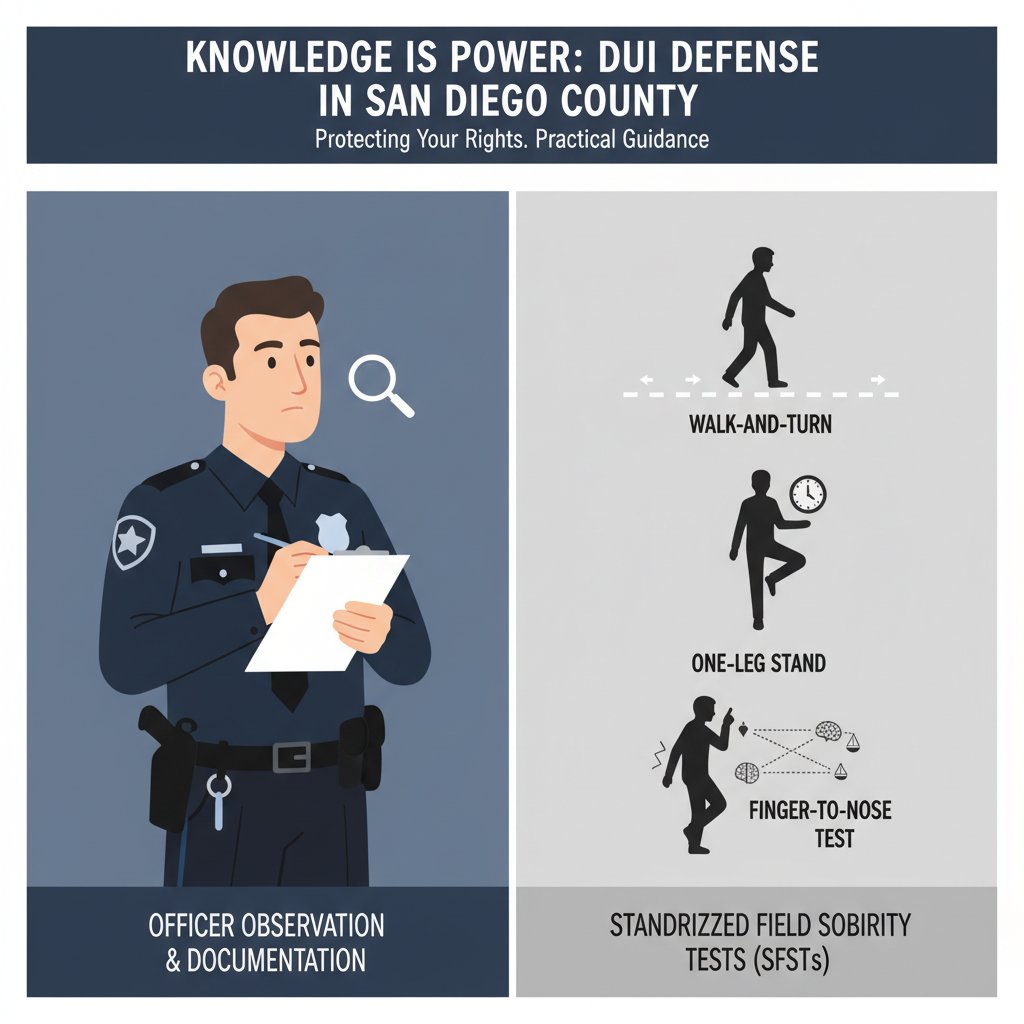
Field sobriety tests are physical and cognitive exercises that law enforcement officers use to assess whether a driver might be impaired by alcohol or drugs. Unlike breathalyzers or blood tests that measure blood alcohol concentration (BAC), these tests rely on the officer’s subjective observations of your performance.
The National Highway Traffic Safety Administration (NHTSA) has standardized three specific tests that officers commonly use:
The Horizontal Gaze Nystagmus (HGN) Test
During this test, an officer holds a pen or small flashlight approximately 12-15 inches from your face and moves it horizontally. They’re watching for involuntary jerking of your eyes, which can indicate intoxication. However, many medical conditions, medications, and even fatigue can cause similar eye movements, making this test controversial among defense attorneys.
The Walk-and-Turn Test
This test requires you to take nine heel-to-toe steps along a straight line, turn on one foot, and return the same way. Officers look for signs like stepping off the line, using arms for balance, taking the wrong number of steps, or inability to complete the test. What many people don’t realize is that this test is challenging even for sober individuals, especially on uneven pavement, in uncomfortable shoes, or for people with certain physical conditions.
The One-Leg Stand Test
You’ll be asked to stand with one foot approximately six inches off the ground while counting aloud for 30 seconds. Officers watch for swaying, using arms for balance, hopping, or putting your foot down. Again, this test can be difficult for anyone with balance issues, back problems, or who is significantly overweight, regardless of sobriety.
Non-Standardized Field Sobriety Tests
Beyond these three standardized tests, California officers sometimes administer additional tests that lack NHTSA approval. These might include reciting the alphabet, counting backward, touching your finger to your nose, or other exercises. These non-standardized tests are even more subjective and easier for a skilled DUI defense attorney to challenge in court.
Can You Legally Refuse Field Sobriety Tests in California?
Yes. In California, you can refuse to perform field sobriety tests, and this refusal cannot result in automatic penalties like license suspension. This is a crucial distinction that sets field sobriety tests apart from chemical tests (breath, blood, or urine tests).
When you obtained your California driver’s license, you gave “implied consent” to chemical testing if an officer has probable cause to arrest you for DUI. However, this implied consent does not extend to field sobriety tests, which occur before arrest. These pre-arrest tests are voluntary, though officers rarely make this clear during traffic stops.
The Difference Between Field Sobriety Tests and Chemical Tests
Understanding this difference is essential for anyone facing a DUI stop:
- Field Sobriety Tests: Voluntary, conducted before arrest, refusal carries no automatic penalty, results are subjective
- Chemical Tests: Mandatory after lawful arrest under implied consent law, refusal triggers automatic one-year license suspension and can be used against you in court
- Preliminary Alcohol Screening (PAS) Tests: These roadside breathalyzers are generally voluntary for drivers over 21 (unless you’re on DUI probation), though officers often don’t clarify this
Many drivers confuse these categories and believe they must comply with all testing or face immediate consequences. A knowledgeable dui attorney san diego can help you understand how your choices during the traffic stop affect your case.
Should You Refuse Field Sobriety Tests?
This question doesn’t have a one-size-fits-all answer. Your decision depends on your specific circumstances, but here are important factors to consider:
Reasons You Might Refuse
Field sobriety tests are designed to collect evidence against you. Even sober individuals can fail these tests due to nervousness, physical conditions, uneven surfaces, poor lighting, or uncomfortable clothing. If you refuse, officers have less subjective evidence to use in building a DUI case.
Many experienced DUI defense attorneys note that field sobriety test videos often become prosecution evidence. Your performance—whether affected by actual impairment or simply by stress and difficult conditions—can be replayed for judges and juries. Without this footage, the prosecution’s case may rest more heavily on the officer’s written report, which can be easier to challenge.
Potential Consequences of Refusing
While refusing field sobriety tests in California carries no automatic legal penalty, officers may interpret refusal as consciousness of guilt. This refusal can be mentioned in court, and prosecutors might argue that you refused because you knew you were impaired.
Additionally, refusing these tests doesn’t prevent arrest. If an officer smells alcohol, observes other signs of impairment, or has other reasons to suspect DUI, they can still arrest you based on their observations alone. After arrest, you’ll face the mandatory chemical test under implied consent laws.
What About Preliminary Alcohol Screening Tests?
The roadside breathalyzer (PAS test) occupies a middle ground. For most drivers over 21 who aren’t on DUI probation, this test is voluntary before arrest. However, officers often present it as mandatory. The results can establish probable cause for arrest and provide BAC evidence for prosecution.
If you’re certain you haven’t been drinking or your BAC is well below 0.08%, this test might help you. However, if you’ve consumed any alcohol, refusing the PAS test (while understanding you must take a chemical test after arrest) might be advantageous. This is one reason consulting with a dui lawyer escondido or San Diego attorney immediately after an incident is so important.
How Field Sobriety Test Results Are Used in Court
When you perform field sobriety tests, officers document your performance through written notes, audio recordings, and dashboard or body camera footage. These observations become evidence that prosecutors use to prove impairment beyond a reasonable doubt.
In California DUI cases, prosecutors must prove either that your BAC was 0.08% or higher, or that you were impaired regardless of BAC. Field sobriety tests primarily serve this second purpose—demonstrating impairment through your physical and cognitive performance.
An experienced DUI defense attorney can challenge field sobriety test results by highlighting:
- Improper administration of the tests by the officer
- Medical conditions or physical limitations affecting performance
- Environmental factors like uneven pavement, poor lighting, or weather conditions
- Inappropriate footwear or clothing restrictions
- Language barriers or confusion about instructions
- Nervousness or anxiety affecting coordination
- The subjective nature of the officer’s scoring and observations
Protecting Your Rights During a DUI Stop
If you’re pulled over and the officer suspects DUI, remember these important points:
Be polite and cooperative with basic requirements. Provide your license, registration, and insurance. Comply with commands to exit the vehicle. Rudeness or resistance creates additional problems and evidence against you.
You have the right to remain silent. You must identify yourself, but you don’t have to answer questions about where you’ve been, whether you’ve been drinking, or how much you’ve consumed. Politely declining to answer is your constitutional right.
Understand what’s mandatory versus voluntary. Field sobriety tests are voluntary. Roadside PAS tests are generally voluntary for drivers over 21 not on DUI probation. Chemical tests after arrest are mandatory.
Don’t argue with officers about the law. If you choose to refuse field sobriety tests, do so politely. This isn’t the time to debate. Simply say you’d prefer not to take the tests and that you’d like to speak with an attorney.
Document everything you can remember. As soon as possible after the stop, write down details: what you ate and drank, when, the timeline of events, weather conditions, what the officer said, and any relevant information about your health or physical condition that day.
What Happens After a DUI Arrest in San Diego County
If you’re arrested for DUI, whether you performed field sobriety tests or not, you face both criminal court proceedings and a separate DMV administrative hearing regarding your license. Many people don’t realize these are two distinct processes with different rules and potential outcomes.
You have only 10 days from your arrest date to request a DMV hearing to contest your license suspension. Missing this deadline means automatic suspension. This tight timeline is why contacting a dui attorney san diego immediately after arrest is crucial.
In criminal court, you’ll face charges that could result in jail time, fines, DUI school, probation, and long-term consequences for your insurance, employment, and professional licenses. The specific penalties depend on factors like your BAC, whether anyone was injured, whether you have prior DUIs, and other circumstances of your case.
Why Early Legal Representation Matters
The hours and days immediately following a DUI arrest are critical. Evidence must be preserved, witnesses identified, and strategic decisions made. Working with a dedicated dui defense attorney who personally handles your case—rather than passing it to junior associates—ensures someone with experience is protecting your rights from the beginning.
A solo practitioner focused on criminal defense can provide the personal attention your case deserves. You’ll speak directly with your attorney, not an intake coordinator or paralegal. This direct communication means your lawyer understands the nuances of your situation and can develop a defense strategy tailored to your specific circumstances.
In San Diego County, understanding local court procedures, building relationships with prosecutors, and knowing the tendencies of specific judges can significantly impact case outcomes. An attorney who regularly practices in Vista, El Cajon, Chula Vista, and downtown San Diego courts brings valuable local knowledge to your defense.
Defending Against DUI Charges Involving Field Sobriety Tests
When field sobriety tests are part of the prosecution’s evidence, several defense strategies might apply. Your attorney will examine whether officers properly administered the tests according to NHTSA guidelines, whether they accounted for your individual circumstances, and whether their interpretations of your performance were reasonable.
Medical records, witness testimony, and expert witnesses can help explain alternative reasons for poor performance on these tests. Sometimes challenging the traffic stop itself—questioning whether officers had reasonable suspicion to stop you initially—can result in suppression of all evidence obtained after the illegal stop.
Each case is unique. Perhaps you have a medical condition affecting balance, perhaps the testing environment was particularly challenging, or perhaps the officer’s observations don’t align with other evidence like normal driving patterns or coherent conversation.
Get the Personal, Dedicated Defense You Deserve
Facing DUI charges feels overwhelming. You’re worried about losing your license, your job, and your freedom. You’re concerned about how this will affect your family and your future. These fears are normal, and you don’t have to face them alone.
Understanding your rights regarding field sobriety tests california is just one piece of building a strong defense. Whether you performed these tests or refused them, whether your BAC was above or below the legal limit, you deserve an attorney who will personally fight for the best possible outcome in your case.
If you’re facing DUI charges in San Diego County, don’t wait to protect your rights. Contact a dedicated DUI defense attorney who will give your case the personal attention it deserves. As a solo practitioner, I handle every aspect of your case personally—from our first conversation through trial if necessary. You’ll have direct access to an experienced attorney who knows San Diego courts and understands the stress you’re experiencing.
Flexible payment plans are available because financial concerns shouldn’t prevent you from getting quality legal representation when you need it most. Call today to discuss your case and learn how we can work together to protect your rights, your license, and your future.