
Getting arrested for DUI in California sets two separate legal processes in motion—and many people don’t realize this until it’s too late. While the criminal court case addresses potential criminal penalties, the Department of Motor Vehicles (DMV) independently pursues administrative action against your driving privileges. Understanding this DMV hearing process is crucial because you have only 10 days from your arrest to request a hearing, or your license will automatically be suspended.
This administrative proceeding, formally called an Admin Per Se (APS) hearing, operates completely separate from your criminal DUI case. The consequences can be just as severe, potentially resulting in a license suspension that affects your ability to work, care for your family, and maintain your daily life. If you’ve been arrested for DUI in San Diego County, understanding what to expect from the DMV hearing process—and why working with a qualified dui attorney san diego can make a critical difference—is essential to protecting your rights.
The Critical 10-Day Deadline You Cannot Miss
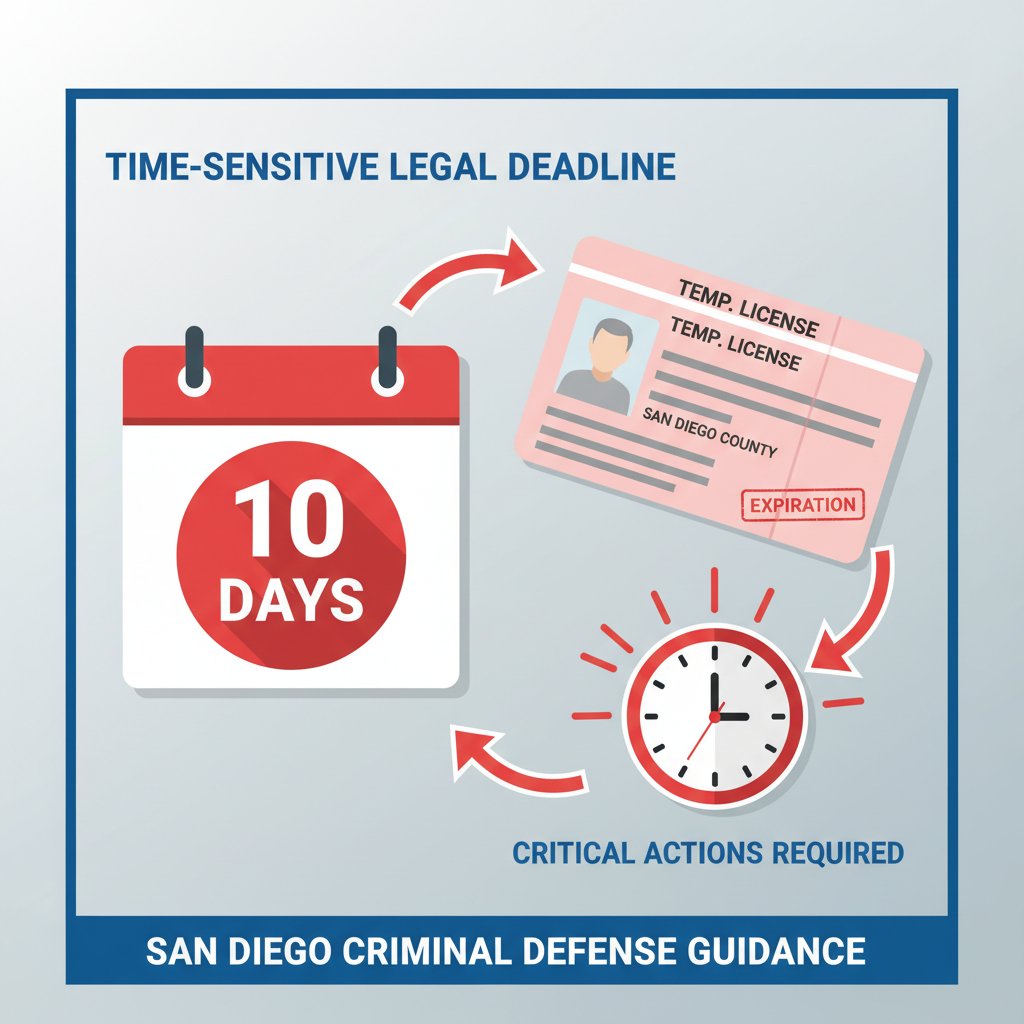
When you’re arrested for DUI in California, the officer typically takes your physical driver’s license and issues you a temporary license that’s valid for 30 days. Along with this temporary license, you should receive a notice explaining your right to request a DMV hearing. This is where the clock starts ticking.
You have exactly 10 days from the date of your arrest to contact the DMV and request an administrative hearing. This isn’t 10 business days—it’s 10 calendar days, including weekends and holidays. If you miss this deadline, your license will be automatically suspended when your temporary license expires at the 30-day mark, and you’ll have forfeited your opportunity to contest the suspension.
Many people in the confusion and stress following a DUI arrest overlook this critical deadline or assume their criminal defense attorney will automatically handle it. However, requesting the DMV hearing is a separate action that must be taken promptly. A dui lawyer escondido or anywhere in San Diego County can request this hearing on your behalf, but they need to be retained quickly enough to meet the deadline.
When you or your attorney request the hearing within the 10-day window, two important things happen: first, you get your administrative hearing where you can challenge the suspension; second, your driving privileges remain valid until the hearing is conducted and a decision is made. This stay of suspension can be invaluable, especially if the hearing takes several weeks to schedule.
What the DMV Hearing Actually Involves
Unlike a criminal court proceeding with a judge and jury, a DMV administrative hearing is conducted by a DMV hearing officer. These hearings can be conducted in person at a DMV Driver Safety Office or, as has become increasingly common, by telephone. The proceeding is less formal than a criminal trial, but the stakes remain high.
The DMV hearing officer serves as both judge and jury, reviewing the evidence and making the final determination about whether your license should be suspended. While this person is supposed to be neutral, they are employed by the same agency seeking to suspend your license, which is why having experienced legal representation matters.
During the hearing, the DMV must prove specific facts depending on whether your case involves a breath or blood test refusal or an actual test result over the legal limit. The burden of proof is also lower than in criminal court—the DMV need only prove its case by a “preponderance of the evidence” rather than “beyond a reasonable doubt.”
What the DMV Must Prove
For a DUI with a chemical test result over the legal limit, the DMV must establish:
- The peace officer had reasonable cause to believe you were driving under the influence
- You were lawfully arrested
- You were driving with a blood alcohol concentration (BAC) of 0.08% or higher
- The chemical test was properly administered according to legal standards
For a refusal case, the DMV must prove:
- The officer had reasonable cause to believe you were driving under the influence
- You were lawfully arrested
- You were properly advised of the consequences of refusing the test
- You refused or failed to complete the chemical test
How a DUI Defense Attorney Can Make the Difference
While you have the right to represent yourself at a DMV hearing, doing so puts you at a significant disadvantage. A san diego dui lawyer brings specific knowledge about California DUI laws, DMV procedures, and effective defense strategies that can substantially improve your chances of prevailing.
An experienced dui defense attorney can challenge the evidence in multiple ways. They can examine whether the arresting officer truly had reasonable cause to stop your vehicle in the first place. They can scrutinize whether the field sobriety tests were properly administered and whether the officer followed correct procedures during your arrest.
Chemical test results can also be challenged. Breathalyzer machines require regular calibration and maintenance, and breath test results can be affected by numerous factors including medical conditions, diet, mouth alcohol, and improper administration. Blood tests must follow strict chain-of-custody protocols and proper storage procedures. An attorney knows how to obtain and review maintenance records, training certifications, and test procedures to identify potential problems with the evidence.
Working with a solo practitioner means you get personalized attention to your specific case. Your attorney will directly handle your DMV hearing, rather than delegating it to a junior associate or paralegal. This personal involvement often results in more thorough preparation and more effective advocacy at your hearing.
Understanding the Potential Consequences of DUI License Suspension
The length of a dui license suspension through the DMV administrative process depends on several factors, including whether this is your first DUI offense and whether you refused chemical testing.
For a first-time DUI with a BAC test result, you typically face a four-month license suspension. However, you may be eligible for a restricted license after 30 days that allows you to drive to and from work, as part of your employment, and to and from DUI education classes. To obtain this restricted license, you must enroll in a DUI program and file proof of insurance (SR-22).
If you refused chemical testing on a first offense, the consequences are more severe—a one-year license suspension with no eligibility for a restricted license during the first five months. This reflects California’s “implied consent” law, which states that by driving on California roads, you’ve already consented to chemical testing if lawfully arrested for DUI.
For second and subsequent DUI offenses within 10 years, the suspension periods increase significantly, ranging from one to three years depending on the circumstances. Understanding these potential consequences helps explain why fighting the DMV suspension through the administrative hearing process is so important.
The Relationship Between Your DMV Hearing and Criminal Case
Many people wonder how the DMV hearing relates to their criminal DUI case. While these are separate proceedings, they’re based on the same underlying facts and evidence from your arrest. The outcome of one doesn’t necessarily determine the outcome of the other.
You could potentially win your DMV hearing and keep your license while still being convicted in criminal court, or vice versa. However, the DMV hearing often takes place before the criminal trial, which creates an important strategic opportunity.
The DMV hearing can serve as a valuable preview of the prosecution’s case. Your attorney can question the arresting officer under oath, examine the evidence, and identify weaknesses in the state’s case—all before your criminal trial. This information can prove invaluable in negotiating with prosecutors or preparing for trial in your criminal matter.
Additionally, if you prevail at the DMV hearing, it can sometimes strengthen your position in criminal court negotiations. While prosecutors aren’t bound by DMV decisions, a favorable DMV outcome demonstrates problems with the evidence that may make them more willing to reduce charges or offer better plea terms.
What Happens If You Lose Your DMV Hearing
If the hearing officer rules against you and upholds the license suspension, you still have options. You can request an administrative review of the hearing officer’s decision, though this rarely results in reversal. More significantly, you can file a writ petition in Superior Court seeking judicial review of the DMV’s decision.
A writ of mandate or administrative mandate asks a judge to review whether the DMV followed proper procedures and whether substantial evidence supported the hearing officer’s decision. While this is a limited form of review, it can be successful when the DMV made legal errors or lacked sufficient evidence.
Even if your license is suspended, you may have options to minimize the impact on your life. Depending on your specific situation, you might qualify for a restricted license that allows work-related driving, or in some cases, an ignition interlock device (IID) restricted license that allows broader driving privileges if you install a breath-testing device in your vehicle.
Why Early Legal Representation Matters
The single biggest mistake people make after a DUI arrest is waiting to seek legal help. With only 10 days to request your DMV hearing, delay can be devastating. Even waiting a few days to “think things over” or “see what happens” can leave insufficient time to find the right attorney and get the hearing properly requested.
When you contact a qualified DUI attorney immediately after your arrest, they can ensure the hearing is requested on time, begin investigating your case while the evidence is fresh, and start building your defense for both the administrative and criminal proceedings.
Legal representation doesn’t have to be financially out of reach. Many attorneys, including solo practitioners who keep overhead costs lower, offer flexible payment plans and financing options. The cost of effective representation is typically far less than the long-term consequences of license suspension, including lost employment opportunities, increased insurance rates, and the costs and inconvenience of not being able to drive.
Take Action Now to Protect Your Driving Privileges
If you’ve been arrested for DUI in San Diego County, your first call should be to an experienced DUI defense attorney who can immediately request your DMV hearing and begin protecting your rights. Whether you’re in San Diego, Escondido, or anywhere in the county, don’t let the 10-day deadline pass.
Working with a dedicated solo practitioner means you’ll receive personal attention throughout this stressful process. You’ll communicate directly with the attorney handling your case, not paralegals or support staff. Your calls will be returned promptly, your questions answered clearly, and your case will receive the focused attention it deserves.
A DUI arrest doesn’t have to mean automatic license suspension. With prompt action and experienced legal representation, you can contest the DMV’s action and fight to preserve your driving privileges while simultaneously defending against the criminal charges. The DMV hearing provides an important opportunity to challenge the evidence against you—but only if you act within the critical 10-day window. Contact a qualified DUI attorney today to discuss your case and protect your rights before it’s too late.